Cohesive paper or cohesive corrugated wrap: which one protects what
Cohesive paper keeps dust and scuffs off. Cohesive corrugated adds some cushioning and corner protection. Neither is for glass. Uses, sizes and limits.
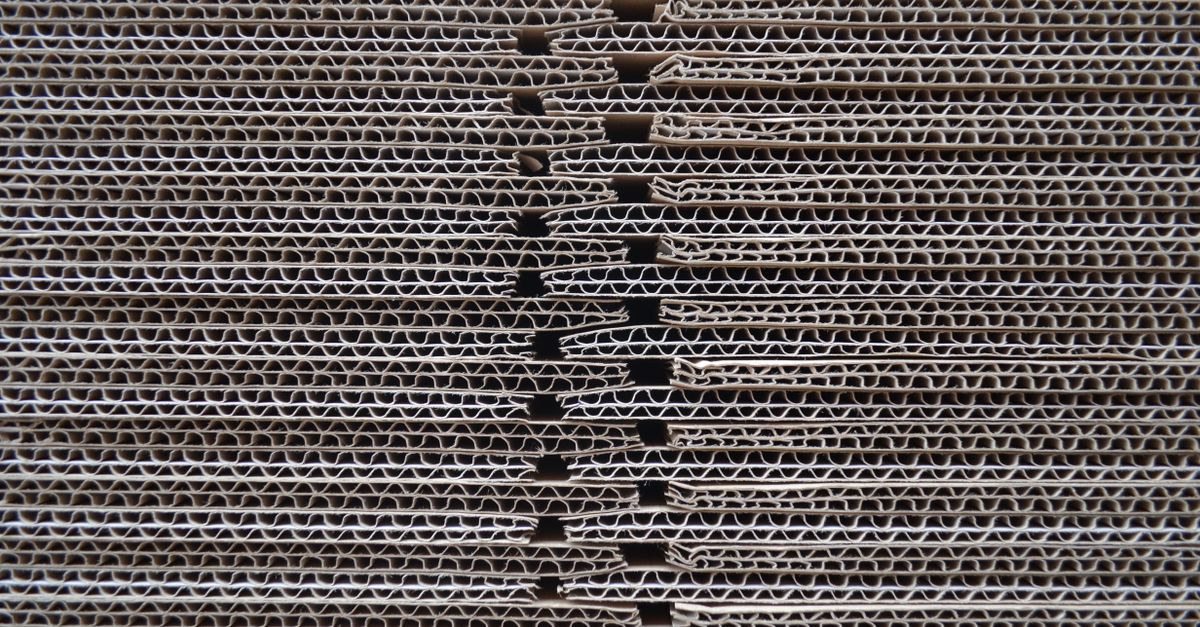
Two brown rolls can look almost the same on a stockist's website. Both stick only to themselves. Both promise no tape and no residue. One is a thin kraft paper. The other is single-face corrugated board, with its ridges on show.
They do different jobs.
Here is the short answer. Cohesive paper protects a surface: it keeps dust, dirt and scuffs off, and holds parts together. Cohesive corrugated wrap adds some cushioning, some stiffness and real protection at the corners. Neither one is meant for glass, ceramics or anything that breaks when it is dropped.
Checked against sources on 29 October 2026.
A disclosure before we start. We make the flat paper. We coat kraft paper with a natural rubber latex cohesive on our own coating line in Jaipur. So read the paper side of this comparison knowing where my bias sits. I have tried to give the corrugated wrap its fair due, because for some products it is the better buy.
What is the difference between the two?
Both work on the same idea. A latex coat (often called cold seal) bonds firmly to the same coat and not to anything else. You wrap the item, press the coated faces together, and the pack is closed. Uline's page for its cohesive corrugated wrap says the corrugated "sticks to itself, not to your product".
The difference is the material under the coat.
- Cohesive paper is flat kraft paper. We have made ours at 65 and 80 GSM. Springpack in the UK sells its self seal paper at 80 or 240 gsm. In North America the common grade is 40 lb kraft, as on the Zynpak page in Canada.
- Cohesive corrugated is single-face board, i.e. a flat liner glued to a fluted sheet, with the coat on one face. Uline's version is B flute at a 50 lb basis weight. A German stockist, Pack-Verde, lists its roll at 235 g/m².
So the corrugated weighs about three times as much per square metre as an 80 GSM paper. It is also far thicker, because of the flutes. That thickness is the whole point of it.
What cohesive paper protects against
Many families in Jaipur pull a cloth cover over the car at night. It keeps off the dust and the bird droppings. It stops a scratch when a cycle handle brushes past. Nobody expects it to save the car in an accident.
Cohesive paper is that cover.
Pregis, a large US maker, says its cohesive paper "forms an enclosure", and talks about dust, dirt and abrasion. The applications page of IPS Packaging & Automation says the same thing from the other side: paper is for dust and dirt protection when cushioning is not needed.
In practice it does four jobs well:
- It keeps dust, oil and dirt off finished parts in storage and transit.
- It stops two items in one carton from rubbing the paint or print off each other.
- It holds a set of small parts together as one bundle.
- It closes around a long, thin item (a furniture leg, a trim strip, a rod) in one move, with no tape to cut.
Our paper is also water-resistant, which helps on a damp route. Do not expect it to survive a soaking. And not every cohesive paper is water-resistant at all: Hisago in Japan sells its roll as having no water resistance. Ask before you assume.
What paper does not do is soften a knock. A sheet a fraction of a millimetre thick has nothing in it to squash. Hisago prints this plainly on its product page: the paper is not a cushioning material.
I will say the same about our own paper. It gives no cushioning. If your item needs a cushion, buy a cushion.
What cohesive corrugated adds
The corrugated wrap is closer to the rubber strip on the pillars of an apartment parking basement. It takes the scrape when a bumper touches the corner. It softens a slow knock. It will not stop a truck.
Pregis calls its cohesive single face "an ideal packaging material when cushioning and rigidity are necessary". IPS says corrugated is the one to use when cushioning is needed. That fits the board itself. The flutes squash a little under a knock, and the board resists bending.
So corrugated earns its extra bulk in three cases:
- The item has corners or edges that hit first, like a cabinet door, a panel or a part with hard ends.
- The item can bend, like a large catalogue or a thin panel.
- The wrap is the only outer pack, and the parcel will meet conveyors and other parcels on the way.
Notice that I wrote "some" cushioning. Uline's own line for its corrugated wrap is "Wrap and seal non-fragile items quickly". One layer of single-face board is a light cushion. It is not a replacement for proper cushioning around something that breaks.
Neither one is for glass
This is the section I would ask every buyer to read.
Glass, ceramics, cosmetics in glass jars and anything with a screen need a cushion that can absorb a drop, on every side, inside a box. Cohesive paper has no cushion at all. Cohesive corrugated has a little, and Uline, which stocks it in four sizes, sells it for non-fragile items. Our own self-seal paper page sends glass and ceramics to our honeycomb paper wrap instead.
One UK stockist lists fragile items among the uses of its cohesive kraft. I disagree. I would not send a glass jar out on that advice.
For fragile goods, start with our guide to choosing cushioning by product weight and fragility. If bubble wrap is the answer, bubble wrap grades explained will help you buy the right grade.
Which one for which product
This is the table I would start from. Test it on your own product before you switch a whole line.
| What you ship | Cohesive paper | Cohesive corrugated | My starting pick |
|---|---|---|---|
| Furniture legs, rails, trim strips | Keeps scuffs and dust off | Adds protection at ends and corners | Paper, with corrugated on any end that sticks out |
| Boxed auto parts, hardware sets | Keeps them clean and together inside the carton | Usually more than you need | Paper |
| Loose metal parts with sharp edges | A sharp point can go through thin paper | Takes an edge better | Corrugated |
| Books going into a mailer or box | Stops scuffs and rubbing | Not needed | Paper |
| Books going out with no other pack | Too thin on its own | Stiffens and pads the corners | Corrugated |
| Folded clothes and soft goods | Keeps them clean and folded | Not needed | Paper |
| Cabinet doors, panels, drawer fronts | Protects the face | Protects the face and the edges | Corrugated, or paper with corner pieces |
| Glass, ceramics, screens | No | No | Neither. Use real cushioning in a box |
The uses in this table are the ones the makers themselves list. Pregis names books and media, apparel, auto parts and furniture for its paper, and cabinet trim, furniture and auto parts for its single face. IPS names auto parts, cabinetry and millwork. A Quebec stockist, LP Aubut, sells its cohesive paper for furniture legs and thin items of different lengths.
For books and catalogues in detail, our guide to mailing books and flat items without tape goes item by item.
Sizes side by side
The two are sold in very different rolls, and that changes how often a packer stops to load a new one.
| Market | Cohesive paper | Cohesive corrugated |
|---|---|---|
| North America | 700 ft (about 213 m) rolls, 5 to 30 inch wide, often 40 lb kraft (LP Aubut, Zynpak) | 250 ft (about 76 m) rolls at 12, 18 and 24 inch, plus 30 inch x 50 ft (Uline) |
| UK and Europe | 200 m rolls in the UK, such as 200 mm (Hub Packaging) and 300 mm (KB Packaging) | 100 m rolls: 360 and 450 mm in the UK (Packaging First), 70 cm at 235 g/m² in Germany (Pack-Verde) |
Do the arithmetic once. A 700 ft paper roll carries close to three times the length of a 250 ft corrugated roll. The corrugated roll is also much fatter: Pack-Verde gives its 100 m roll a diameter of about 55 cm. That is a lot of floor space beside a packing table.
Our own paper is slit on a 3-inch (76 mm) core. We slit it to the North American widths (6, 7.5, 10 and 15 inch on about 705 ft rolls) and to the European 300 and 600 mm x 200 m rolls. Other widths, up to our jumbo width, are made on request. The details are on Jagannath Polymers' self-seal paper page.
What the two have in common
Some rules apply whichever one you buy.
- Latex. Both are usually coated with natural rubber latex, and ours is too. If any of your packers has a latex allergy, give them gloves. Hisago prints an allergy caution on its roll for the same reason.
- Test first. Try a sample on very glossy, painted or polished surfaces before you change over. Hisago also warns against wrapping rubber or PVC goods directly.
- Pressure, not heat. The coat seals when you press it. Hisago suggests pressing at least about 25 mm all around the contents.
- Shelf life. Uline lists 6 months for its corrugated wrap, and Hisago says to use its paper within about six months of opening. Store rolls cool and dry, out of the sun, in their own wrap, and use the older rolls first.
- Opening. Makers can add tear strips or perforations, as Pregis offers on its rolls. Ask for one if your customers struggle to open the pack.
What about recycling?
Both are mostly paper, and both are sold as recyclable. Here is what we say about our paper, and why:
- It is 100% recyclable, because it goes in with paper and cardboard recycling. It contains no plastic.
- It is biodegradable, because the base is plain kraft paper.
Pack-Verde tells buyers to put its cohesive corrugated in the waste paper, under recycling code PAP-20. None of these stockist pages, ours included, quotes a paper-mill test of the latex coat itself. If your buyer is in the UK or the EU and asks for evidence, ask your supplier what stands behind the claim.
Three questions that decide it
- Does the item break if it is dropped? Then neither wrap is the answer on its own. Put a cushion around it, in a box.
- Will the wrap be the only outer pack? If the item bends or has hard corners, use corrugated. If it goes into a box or mailer anyway, paper is usually enough.
- What damage do you see today? Scuffs, dust and rubbed print point to paper. Dented corners and bent edges point to corrugated. Cracks point to cushioning. Our guide on why products break in transit helps you read the damage.
What to do next
Pick the three products that come back damaged most often. Wrap ten of each in the material the table suggests, and put them through the drop test in our warehouse guide. Count the scuffs and the dented corners, not just the breakages.
If paper looks right for you, send us the size of the item. We will suggest a width, and you can test a roll against what you use now.
Questions buyers ask
Does cohesive wrap stick to the product?
It should not. The coat bonds to the same coat, not to your product, and that is how Uline and Pregis both describe their wraps. Still, test a sample on very glossy, painted or polished surfaces before you change your whole line. A Japanese maker also warns against wrapping rubber or PVC goods directly.
Do I still need a box?
With paper, usually yes, unless the item is sturdy and the wrap is only there to keep it clean. Cohesive corrugated is often used as the whole pack for flat, sturdy items such as books. A Swiss stockist sells pre-cut sheets and names mail-order books among their uses.
Is either one recyclable?
Both are mostly paper. Our self-seal paper is recyclable because it goes in with paper and cardboard recycling, and a German stockist tells buyers to put its cohesive corrugated in the waste paper. None of the stockist pages quotes a mill test of the latex coat, so if your buyer needs evidence, ask your supplier for it.